If the browser can see it, it’s not a secret
 API keys
A practical guide to handling .env files in frontend & backend apps
Had a small panic moment today.
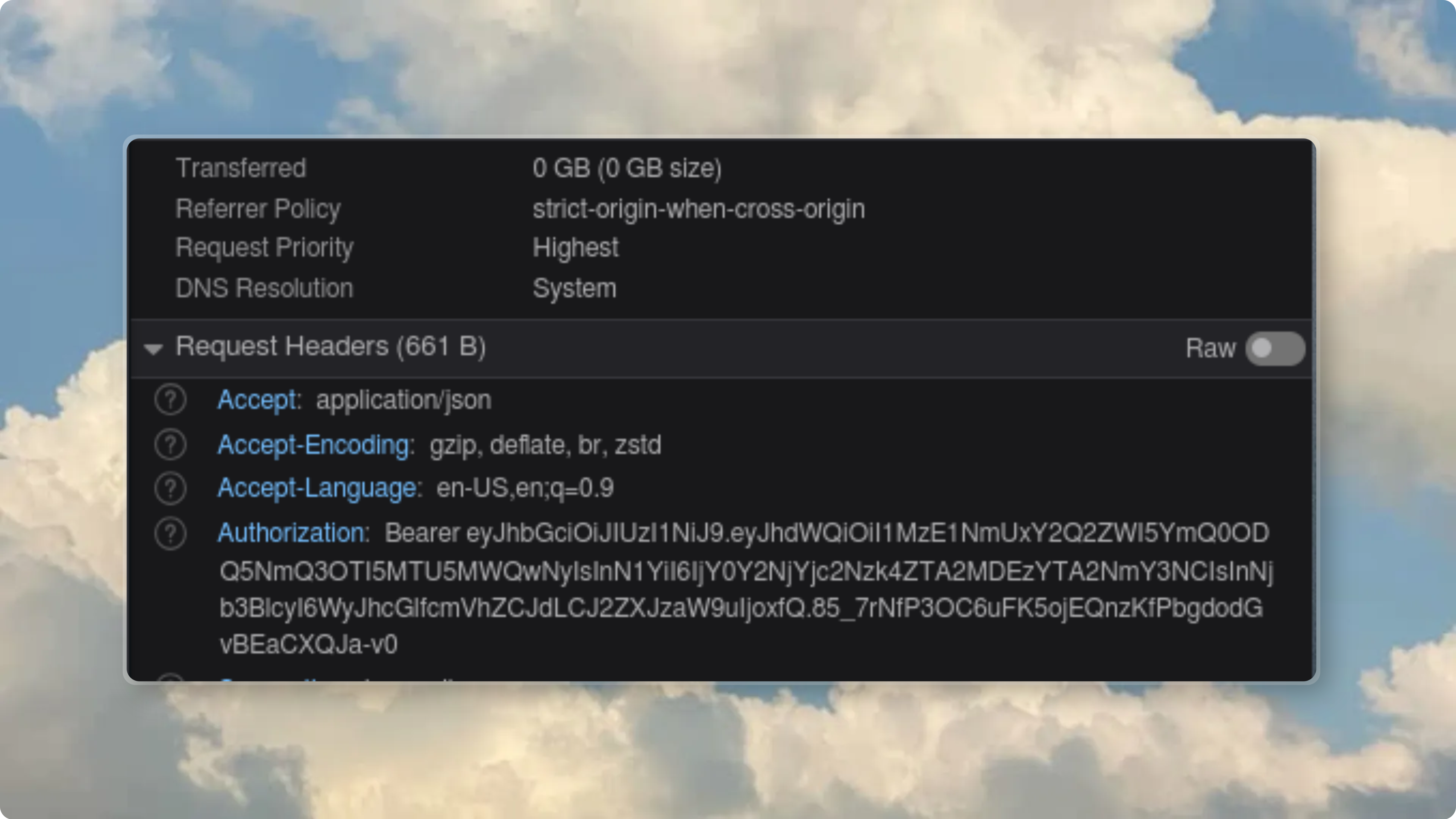
I was checking a frontend request in DevTools and noticed something I really shouldn’t have.
The bearer token.
The same API key I’m paying for. Just sitting there in the headers.
Felt dumb for a minute — but honestly this is one of those lessons you only learn the hard way.
Takeaway:
If your API key is in the frontend, it’s already public.
Doesn’t matter if it’s hidden in code, env files, minified bundles, or request headers.
If it ships to the browser, the browser can read it.
If the browser can read it — so can anyone else.
This post isn’t just about that mistake though. It’s a complete mental model for handling .env files across frontend and backend — what they actually do, what they don’t do, and the traps people fall into.
First — what .env files actually are (and aren’t)
A .env file is not security.
It’s just configuration.
All it does is let your runtime inject values into your application environment. That’s it.
It does NOT:
- Encrypt values
- Hide secrets
- Prevent exposure
- Protect keys
It simply avoids hardcoding values in source.
Whether those values stay private depends entirely on where they’re used.
That distinction matters more than anything else in this article.
The core rule
Backend environment variables → private
Frontend environment variables → public
That’s the whole game.
If code runs:
- On a server → variables stay server-side
- In a browser → variables are bundled and exposed
There’s no middle ground here.
Why frontend env vars are always exposed
Modern frontend apps bundle everything.
Webpack
Vite
Parcel
Next.js build step
They replace environment variables at build time, not runtime.
So this:
process.env.API_KEY
Becomes this:
"sk_live_abc123"
Inside your JS bundle.
Anyone can:
- View source
- Inspect network requests
- Check DevTools
- Decompile bundles
Even if:
- Code is minified
- Variables are “hidden”
.envisn’t committed
None of that matters.
You shipped the secret.
It’s public now.
The correct architecture
Frontend should never talk to third-party APIs using secrets.
Instead:
Browser
   ↓
Your Backend
   ↓
Third-Party Service
Backend adds:
- Bearer tokens
- API keys
- Auth headers
Because backend env vars aren’t exposed.
“I don’t have a backend”
You probably do.
If you use Next.js
API routes already exist.
/app/api/*
/pages/api/*
They run server-side.
Secrets are safe there.
If you deploy static frontend
Use lightweight middle layers:
- Cloudflare Workers
- Vercel Edge Functions
- Netlify Functions
- AWS Lambda
You don’t need a monolith server.
Just a secure hop.
Frontend env vars that ARE okay
Not everything is forbidden.
Safe examples:
- Public analytics keys
- Feature flags
- Public base URLs
- Sentry public DSN
- Firebase public config
Rule of thumb:
If leaking it costs money or grants access — don’t expose it.
Framework-specific gotchas
Next.js
Anything prefixed with:
NEXT_PUBLIC_
Is exposed to the browser.
People forget this constantly.
This is public:
NEXT_PUBLIC_API_KEY=hello_world
This is private:
SECRET_KEY=hello_world
Unless you reference it in client code — then you just exposed it anyway.
Vite
Same idea:
VITE_
Prefix means public.
Create React App
REACT_APP_
Public.
Pattern you should internalize
Public prefix = bundled
Bundled = exposed
The .env Git mistake everyone makes
.env pushed once → forever compromised.
Even if you delete it.
Git history remembers.
Bots scrape GitHub continuously for:
- AWS keys
- Stripe keys
- OpenAI tokens
Best practice:
1️⃣ Revoke immediately
2️⃣ Rotate keys
3️⃣ Remove from history (optional but good)
Tools:
git filter-repo- BFG Repo Cleaner
But rotation is the real fix.
Production env handling (another common gap)
Local .env isn’t production.
Use platform secret managers:
- Vercel env dashboard
- Render secrets
- AWS Parameter Store
- Docker secrets
- GitHub Actions secrets
Never:
- Commit
.env.production - Upload secrets to CI logs
- Print them for debugging
Yes — people do this.
Runtime vs Build-time confusion
Huge source of bugs.
Frontend
Env read during build
Changing value requires rebuild
Backend
Env read at runtime
Changing value requires restart
People often change .env and wonder why frontend didn’t update.
Because the value is baked into the bundle already.
Personal mental checklist now
Before adding any env var I ask:
1️⃣ Where does this code run?
2️⃣ Could this key cost money?
3️⃣ Could it grant access?
4️⃣ Would I post this on Twitter?
If answer isn’t yes — backend only.
Final takeaway
This whole thing taught me something simple:
The frontend is not trusted.
It’s not private.
It’s not secure.
It’s just a UI running on someone else’s machine.
Treat it that way and your architecture decisions get easier.
Let frontend:
- Collect input
- Render UI
- Call your backend
Let backend:
- Hold secrets
- Sign requests
- Enforce access
- Talk to paid APIs
And remember:
If the browser can see it, it’s not a secret.
Sharing this so someone else doesn’t learn it the expensive way